

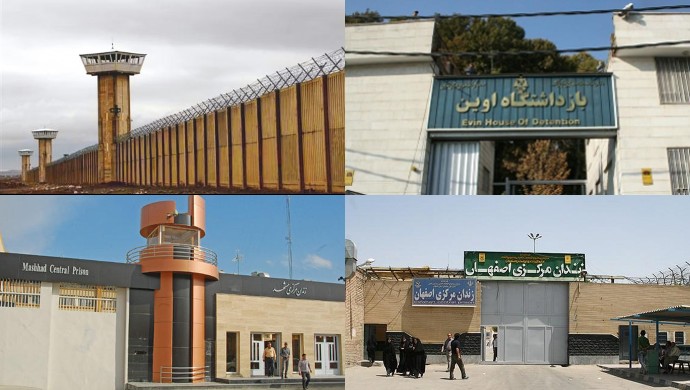

The 40th week of the “No to Executions Tuesdays” campaign has seen intensified participation and resistance across Iranian prisons. With Kahnuj Prison newly joining, 24 prisons now stand in solidarity against the escalating execution rates. As part of this week’s protest, prisoners across the country held hunger strikes to demand an end to the state’s ongoing use of capital punishment.
The campaign now Evin (Women’s Ward, Wards 4 and 8), Ghezel Hesar (Units 3 and 4), Karaj Central, Greater Tehran Prison, Khorramabad Prison, Arak Prison, Asadabad Prison in Isfahan, Nezam Prison in Shiraz, Bam Prison, Mashhad Prison, Lakan Prison in Rasht (Men’s and Women’s Wards), Qaemshahr Prison, Ardabil Prison, Tabriz Prison, Urmia Prison, Salmas Prison, Khoy Prison, Naqadeh Prison, Saqqez Prison, Baneh Prison, Marivan Prison, Kamyaran Prison, Sheiban Prison in Ahvaz, and Kahnuj Prison. This broad network of facilities demonstrates an increasingly unified stance among inmates, standing as symbols of resistance against the government’s harsh policies.
In their latest statement, the striking prisoners voiced alarm over the spike in executions, especially highlighting the tragic figures of the past weeks. In the first week of Aban (beginning on October 22), 27 executions were reported over just three days, averaging nearly seven executions per day. Since the start of this Persian calendar year, approximately 567 people have been executed, with 150 deaths occurring in the single month of Mehr (September 22 to October 21).
“Unfortunately, yesterday, Jamshid Sharmahd was executed after four years of imprisonment. Jamshid Sharmahd had been held in a security detention facility the entire time,” the statement reads. “Over the past four years, security agencies did not allow his transfer to the general ward, aiming to conceal his torture and violations of his human rights.”
The statement also revealed that the sentences of four Baluchi political prisoners—Eido Shahbakhsh, Abdolghani Shahbakhsh, Abdolrahim Qanbarzehi, and Soleiman Shahbakhsh—were confirmed by the court and referred to the Tehran Security Prosecutor’s Office for execution. These prisoners, who have been held under severe conditions for 16 months in Ghezel Hesar’s secure ward, are now at imminent risk.
Despite mounting threats, the prisoners emphasized that the spirit of resistance endures and continues to gain momentum. Last week, family members of death row inmates gathered in front of the Majlis (Iranian parliament) to protest, amplifying the public outcry against these state-sanctioned killings. This week, they resumed their protest rally, calling for an end to executions.
More photos of protest rally by families of death row prisoners in Tehran.#IranProtests pic.twitter.com/vdjO8QOt8K
— People's Mojahedin Organization of Iran (PMOI/MEK) (@Mojahedineng) October 29, 2024
The Iranian regime’s intensified use of the death penalty reflects broader fears within the regime’s leadership. The regime has dramatically escalated executions as a means to suppress potential dissent and curb public discontent. On October 23, four prisoners were executed in Karaj Central Prison, while four others were executed in Ghezel Hesar Prison. Several other executions were carried out earlier in the week. The number of executions in Mehr (September 22–October 21) was 85% higher than the previous year’s tally for the same month.
This wave of executions and corresponding resistance efforts underscores an urgent call for global solidarity with the Iranian people. Human rights organizations and advocates around the world should to echo the prisoners’ demands and hold the Iranian regime accountable for these severe human rights violations.