


Iran, a country rich in culture, has been deprived of some basic human blessings such as joy and the enjoyment of life under the of mullahs’ rule. Happiness and joy have been replaced, and even their civil rights have been taken away. Iranian society has regressed to the point where there is no trace of civil rights left. This deplorable situation is the result of the absolute dictatorship imposed on people. The regime has replaced the people’s joy and happiness with death and humiliation.
A contemporary example of the happiness of the oppressed and proud people of Iran is their rejection and boycott of the regime’s sham presidential elections to compensate for the crushing defeats following the death of Ebrahim Raisi, “The Butcher of 1988.” For Khamenei, losing Raisi meant a bleak future for his regime and the collapse of projects aimed at consolidation and exporting terrorism and fundamentalism worldwide. Bringing in second-rate and hardline figures in the sham presidential race was not only ignored by people who have witnessed these performances for decades but also indicated anger, separation, and struggle against the religious charlatans and plunderers. The world clearly saw that most Iranians, even according to the regime’s ridiculous falsification of statistics, despise the mullahs’ rule and want regime change.
Recently, severe economic and livelihood indicators once again warned all officials of the clerical regime that there is no more time or ground to continue the current crisis. Runaway inflation, especially in foodstuffs, has reduced people’s nutrition to the lowest possible levels. Additionally, widespread unemployment, particularly among the educated segment of the society, has reflected the severity of the crisis in the “misery index.” Ham-Mihan newspaper wrote on July 7: “Inflation and unemployment indices are not in a good state, and the misery index in the country is high. The misery index is an economic indicator that is derived from the sum of the unemployment and inflation rates and is considered a measure of the overall economic health of a country. The higher this number, the lower the people’s welfare and the more difficult their living conditions.”
The same report shows that despite all the assistance the appeasement policy of western states has provided to the regime, the misery index has not fallen below 49.3 percent.
Economic expert Hamidreza Ghasemi said: “In recent years, the entire country has suffered from inflation, and unemployment has been high in many provinces. Policies have not moved towards attracting investment, investor confidence has been very low, and in fact, we have managed the country with an average growth rate of zero over the past decade, which naturally deepens the recession, meaning the shutdown of businesses.”
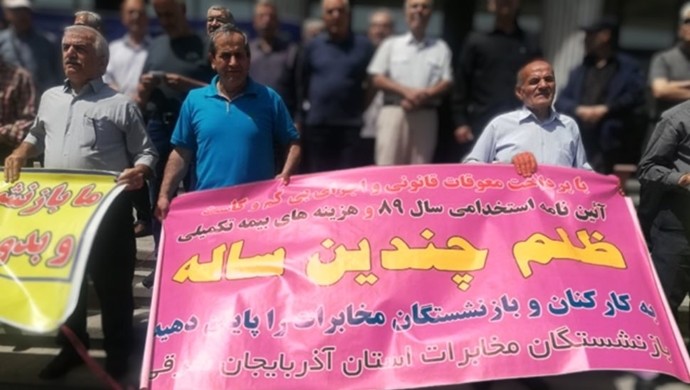
A look at the protest gatherings of workers who have not received their wages for months or whose salaries do not cover living expenses, and retirees who protest daily in various parts of Iran, attests to the severe deterioration of people’s living conditions. “Three days have passed since the second round of the 14th presidential elections, and during these three days, the gatherings of protesting workers in various cities of the country have continued, as in the previous weeks,” Ghasemi said.
Why such a low voter turnout in the elections
The massive boycott of the sham elections by the most deprived segments and classes of society has put the regime’s officials and propagandists in a frenzy. They are “investigating the reasons for the low turnout in the elections in the provinces of Sistan and Baluchestan, Kurdistan, Gilan, and Khuzestan.”
On July 9, the state-run Ham-Mihan newspaper reported: “The 14th presidential election has passed its first and second rounds with low voter turnout, marking a turning point in all elections held since the revolution. People who showed their protest the general situation of the country; to the extent that the regime president Massoud Pezeshkian emphasized this low turnout several times and said, 60 percent of our people do not want us, and their voices must be heard.”
Such reports indicate “various social and economic issues and problems that have discouraged people from participating in elections and the same problems that have caused their political disengagement with the ballot boxes.” From “widespread unemployment in Kurdistan province to severe poverty and neglect of the Sunni population in Sistan and Baluchestan province” to “the destruction of natural resources in Gilan province, which directly affects people’s livelihoods, to cultural, social, and economic deprivations in Khuzestan province.”