

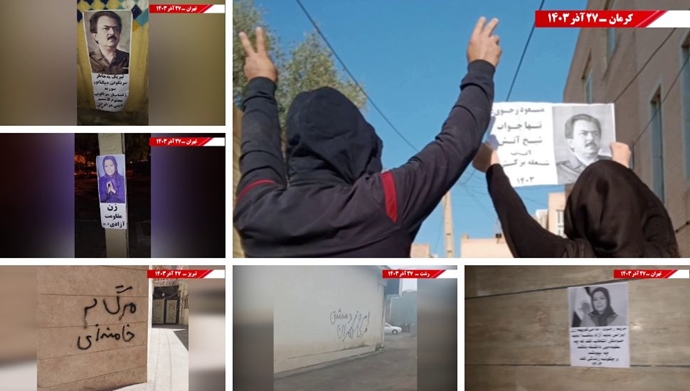

As Bashar al-Assad’s regime falls in Syria, numerous Iranian cities have observed a significant increase in activities against the clerical regime. The PMOI Resistance Units inside Iran have intensified their efforts, with the message that the fall of the Syrian dictator is a precursor to the possible collapse of Iran’s theocratic regime. In their activities, they reflected the prevailing sentiment among the opposition: “Woman, Resistance, Freedom – Death to Khamenei.”
Tehran
"Woman Resistance Freedom" pic.twitter.com/L6obg002mg— People's Mojahedin Organization of Iran (PMOI/MEK) (@Mojahedineng) December 18, 2024
In Tehran, images of Maryam Rajavi, the President-elect of the National Council of Resistance of Iran (NCRI), were prominently displayed with captions advocating for women’s freedom in Iran, including the right to independently choose their clothing, religion, and lifestyle. Slogans such as “No to compulsory hijab, no to compulsory religion, and no to compulsory government” were also repeated across various venues, resonating with the broader message of resistance.
Another recurring image in Tehran featured Massoud Rajavi, the leader of the resistance, whose quotes linked the overthrow of Assad to the potential downfall of the Iranian regime. This sentiment was echoed in cities like Rasht, where slogans declared, “Today Damascus, tomorrow Tehran,” highlighting the perceived impact of Syria’s upheaval on Iran’s future.
Tehran
"Congratulations on the overthrow of the Syrian dictator,
paving the way for the inevitable overthrow of religious fascism in Iran!" pic.twitter.com/tuyxfmWbOo— People's Mojahedin Organization of Iran (PMOI/MEK) (@Mojahedineng) December 18, 2024
The city of Tabriz witnessed more direct expressions of dissent with graffiti boldly stating “Death to Khamenei,” reflecting the growing discontent among the populace. In Bandar Anzali, the message was clear: “The only way to liberation is to overthrow the regime,” a lesson drawn from Assad’s fall, as stated by the protesters.
In Zahedan and Iranshahr, similar sentiments were expressed, emphasizing that the only response to the clerics’ rule should be resistance, a clear indicator of the escalating frustration and desperation among the Resistance Units.
Tabriz
"Down with Khamenei" pic.twitter.com/XDnlsvWPRq— People's Mojahedin Organization of Iran (PMOI/MEK) (@Mojahedineng) December 18, 2024
Despite the regime’s harsh crackdowns, including increased executions and intimidation tactics aimed at suppressing these acts of rebellion, the Resistance Units have shown remarkable courage. Their activities come with the acute awareness that arrest could lead to severe torture or even execution. However, they perceive this as the price for Iran’s freedom from theocratic rule.
As the situation evolves, the uprising in Iran appears emboldened by regional political changes. Assad’s fall is not just a beacon of hope for the Syrian people but also a catalyst for those in Iran who long for an end to decades of clerical authoritarianism. The actions of the Resistance Units underscore a critical juncture in Iran’s political landscape, where calls for freedom are becoming louder and the stakes, undoubtedly, higher.