

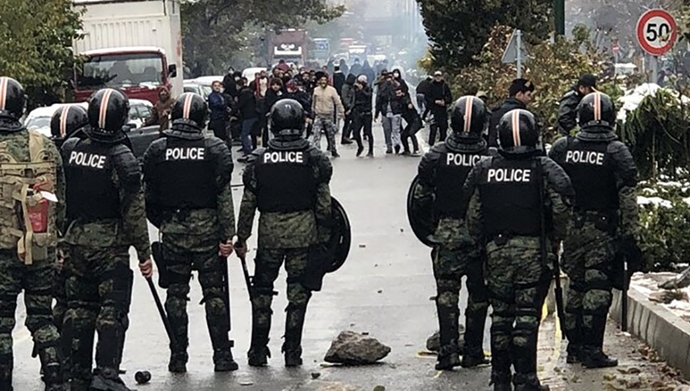

In dictatorships, wounds accumulate, and the terms used to describe them in political discourse are constantly repeated.
The fundamental and long-tested explanation for the misery of the mullahs’ regime ruling lies in its structural rigidity and ideological dogma. The wound, referenced as a repetitive term or phrase in analyzing this regime throughout its lifespan, is the principle of Velayat-e Faqih (the absolute rule of the jurist) and the rigidity it brings. This wound, as a dead end for any movement, modernization, vote, change, and reform, will never heal unless a decisive blow from outside comes in the form of uprising and revolution.
The reality is that the regime Supreme Leader Ali Khamenei, more than anyone else, knows and feels the miseries that his regime is trapped in; if he attempts to change any aspect, it will only lead to internal collapse and an external fatal blow.
The clerical regime stands and leans on two blood-soaked pillars constructed through maximum crime and maximum plunder: politics and the economy—two foundations that define governments and two records that indicate the nature of the relationship between the state and the people.
The Foundation of the Political Deadlock
Nothing happens in the regime that is against the will and opinion of the Supreme Leader. The judiciary, parliament, education system, Islamic Revolutionary Guard Corps (IRGC), police force, foreign policy, Ministry of Culture, Ministry of Intelligence, and any engagement in the political cycle within this regime must all align with the Supreme Leader’s stance. Which of these could Khamenei attempt to reform towards expansion? The first brick of change in any of these would lead to the collapse of the entire structure.
The government, which is supposed to be the executor of the constitution, must first and foremost exhibit absolute submission to the Supreme Leader. Therefore, elections and voting are the most ridiculous aspects in such a structure. As a result, the president is the product of a farcical show that cannot bring any change to the foundational rigidity of the system.
What greater misery could there be for Khamenei than this insurmountable deadlock? No matter what display he resorts to, he will always return from the shallow joys of the show, only to face this wall and be forced to tighten the straps of rigidity even further.
The Foundation of the Economic Deadlock
Fundamentally, the primary direction for spending any income and generating significant capital in Iran is to protect the regime’s structure and strengthen military institutions and foreign proxies, all to preserve the regime. The material and tangible outcome of this economic policy is evident daily on the streets, where one hears the cries for economic and social justice from various groups and classes. Why does Khamenei turn a deaf ear to these cries and never address the protests and demands of these groups in meetings with his regime’s loyal audience? Why is it that, despite the changing governments, there is never any change in the economic situation, and the knot of the major economic crisis only tightens further?
The reason is that similar to its politics, the regime’s economic policies must be absolutely aligned with the desires of the supreme leader and the regime’s power centers.
What greater misery could there be in the economy than for a country to constantly generate capital, yet the regime cannot do anything for the people, leaving no way out other than spending to maintain the regime?
These are the self-made pitfalls of the regime. These are the incurable crises between the interests of the ruling power and class and the demands of the Iranian people. The regime is in a state of repeated rigidity and deadlock, and the people are becoming more resolved to achieve their demands for the right to life and freedom. Masoud Pezeshkian, who has currently taken on the role of the regime’s buffoon president, has come too late, and his act only strengthens the determination of most of the Iranian people to overthrow the regime.