

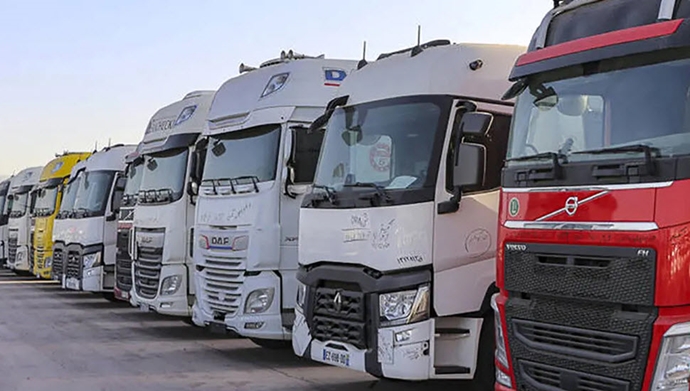

Since November 22, truck drivers across Iran have been on strike in protest against inadequate freight rates, fuel shortages, and soaring operating costs that have made it increasingly difficult for them to earn a living. By November 27, the nationwide strike is in its sixth consecutive day, encompassing 20 cities across 14 provinces.
Despite attempts by regime officials to deny and downplay the protests, the movement has steadily expanded, with fuel tanker drivers also joining the strike in some cities.
The strike in one of Iran’s most vital economic sectors comes amid growing protests by workers, retirees, and other sectors of society over deteriorating living conditions. It highlights not only the worsening economic hardships facing millions of Iranians but also the mounting challenges confronting the regime as economic grievances translate into sustained collective action.
A strike spreading across Iran
The nationwide strike began on November 22 and quickly gained momentum. By November 24, drivers in 15 cities had joined the movement, including Tehran, Shiraz, Isfahan, Qazvin, Bandar Abbas, and Chabahar. In Ahvaz and Kermanshah, fuel tanker drivers also refused to load their vehicles.
By November 26, with drivers in Khorramabad and Malayer joining the strike, the movement had spread to 20 cities across 14 provinces.
On November 27, the Union of Truckers’ and Drivers’ Organizations Across Iran reiterated the drivers’ determination to continue their strike until their demands were met. “Twenty cities, one voice, one heart,” the union declared in a statement, emphasizing the solidarity among striking drivers across the country.
Soaring costs and declining incomes
At the heart of the truckers’ strike is the growing disparity between freight rates and the cost of operating their vehicles. While the prices of tires, engine oil, spare parts, insurance, and repairs have soared, freight rates have failed to keep pace with inflation.
On November 23, the state-run newspaper Jahan-e Sanat acknowledged that the recent 22.6% increase in freight rates was insufficient to compensate for rising operating costs. In some cases, the prices of spare parts have increased fourfold.
Truck drivers are receiving their freight payments in rials while the prices of vehicle parts are determined by the dollar exchange rate, which continues to soar.
For many truckers, continuing to work under these conditions means further financial losses rather than earning a living. The strike is therefore not simply a demand for higher incomes but a struggle to preserve their livelihoods.
A strike with far-reaching economic consequences
What distinguishes the truckers’ strike from many other occupational protests in Iran is the central role of road transportation in the country’s economy. Approximately 90% of Iran’s freight transportation takes place by road, making numerous economic sectors dependent on the work of truck drivers.
The importance of road transportation has increased further amid restrictions on Iran’s maritime trade.
A prolonged strike could disrupt the delivery of raw materials to factories, agricultural products to markets, and essential commodities to distribution centers. The participation of fuel tanker drivers also raises concerns about disruptions to fuel distribution.
At a time when Iranian households are already struggling with soaring prices and declining purchasing power, further disruptions to supply chains could compound the country’s economic difficulties.
The regime’s denial of the crisis
As the strike spread across Iran, regime officials attempted to downplay the protests. On November 23, Reza Akbari, head of the regime’s Road Maintenance and Transportation Organization, denied that a significant strike was underway and claimed that freight transportation was operating normally.
At the same time, Akbari acknowledged that the authorities were examining issues related to drivers’ insurance and the supply of tires and engine oil.
The expansion of the strike in the following days contradicted the regime’s attempts to portray the situation as normal.
The authorities now face a dilemma: failure to address the truckers’ grievances risks prolonging a strike in a vital economic sector, while meaningful concessions could increase pressure from other occupational groups facing similar hardships.
Part of a broader wave of protests across Iran
The truckers’ strike is taking place amid growing discontent among other sectors of Iranian society.
On November 23, telecommunications and Social Security retirees held protest rallies in several cities against inflation and inadequate pensions. Workers at Khorasan Steel in Nishabur also went on strike over low wages, corruption, mismanagement, and threats of layoffs.
On November 24, postal workers in Baharestan County went on strike over inadequate wages, while emergency medical personnel protested over unpaid wages and deteriorating working conditions.
These protests reflect common grievances over the deterioration of living standards and the regime’s failure to address their basic needs.
Salute to the striking drivers in Iran who have been off the job for five days. Under the plundering dictatorship of the mullahs, workers, laborers, and wage earners have been pushed to the breaking point.
Aside from the regime's ringleaders, their families, affiliates, and… pic.twitter.com/yN50Xyw9jj
— Maryam Rajavi (@Maryam_Rajavi) November 26, 2026
On November 26, Mrs. Maryam Rajavi, the president-elect of the National Council of Resistance of Iran (NCRI), saluted the striking truck drivers and emphasized that the conditions facing workers and wage earners had become intolerable under the ruling dictatorship.
The persistence of the truckers’ strike, alongside protests by other sectors of society, illustrates the extent to which Iran’s economic crisis has become a source of sustained social unrest and mounting political pressure on the regime.