

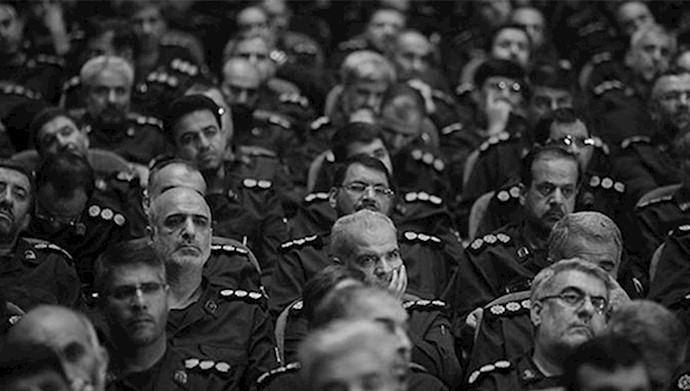

On October 18, during the Friday prayers, Mohammad-Mehdi Hosseini Hamadani, the regime’s prayer leader in Karaj, expressed concerns over “despair, negativity, and the undermining of officials by the system’s own ‘loyal forces.'” He stated, “Some analyses are made by cowardly individuals, influenced by threats and the empty rhetoric of enemies. These lead to conclusions that we should surrender and back down, instilling fear among the people. Such analyses create despair, negativity, and undermine officials, and sometimes even the valued forces fall prey to these perspectives.”
Concern and declining morale among the regime’s loyal forces are widespread. It appears that during this week’s Friday prayers, the representatives of regime supreme leader Ali Khamenei were instructed to address and restore morale following a common directive.
In Isfahan, Yusef Tabatabaei-Nejad referred to “cowards” who say, “If we launch missiles at Israel, they will retaliate and kill. Why should we concern ourselves with that? Let’s focus on our own issues!… Some even question why we engage in conflict with them.”
In Birjand, Friday prayer leader Yusef Mokhtari said, “Sometimes people ask, well, Israel and Palestine are fighting—what does that have to do with us? What does Palestine matter to us? What about Yemen, Syria, or Iraq? We should focus on ourselves! The money we spend there, let’s spend it here. If we invest it domestically, things will improve. Why should we get involved in their conflicts?”
In Mashhad, Ahmad Alamolhoda shared his concerns, lamenting, “Unfortunately, some people ask what we are even doing. We live in this country, yet we are intervening in the Israel-Palestine conflict—not just a minor involvement, but a significant one.”
Concerns about fear and declining morale among the regime’s forces extend beyond speeches by Khamenei’s representatives during Friday prayers. On Thursday, October 17, Mohammad Bagher Ghalibaf, the Speaker of Parliament, delivered a 20-minute speech in Mashhad aimed at boosting the morale of loyal forces, using the words “fear” and “we should not fear” 13 times. He stated, “We should not be afraid! Why should we be afraid? Even if the enemy has advanced technology, why should we fear? Let’s not be afraid!”
While the escalating conflict in the region is firing back at Iran’s regime, which is the main instigator of instability, concerns about declining morale among the regime’s forces have grown so widespread that regime officials and media outlets have started to speak out against the consequences of the regime’s aggressive policies.
On October 19, the state-run Setareh Sobh newspaper quoted a regime analyst as saying, “We did not expect the October 7 attack to backfire,” adding, “Those who think in a narrow, short-term way seem to ignore the medium- and long-term effects of their actions. When faced with setbacks, they blame others and try to deflect. Attacking embassies, adopting anti-Western stances, and drawing lines with various entities in the region stem from a failure to recognize the visible and hidden dimensions of these actions.” On October 13, the same outlet had also expressed fear about the flare-up of “human and social crises,” writing, “Striking oil facilities and power plants plunges the country into darkness, disrupts life, and creates human and social crises.”
Concerns about unrest and widespread protests in the current critical situation were more explicitly voiced by Mohammad Ebadi-Zadeh, Khamenei’s representative in Bandar Abbas. During the October 11 Friday prayers, he stated, “More than fearing enemy planes might bomb a location, we are worried that their agents and followers will attempt to plunge the country into chaos and disorder.”
The regime’s main goal in instigating conflict in the region is to protect its rule from internal crises, specifically the inevitable confrontation between the despotic rulers and the people of Iran. As the regime starts to lose its grasp on its regional warfare, this faceoff becomes ever closer, intensifying the panic among the regime’s officials.