

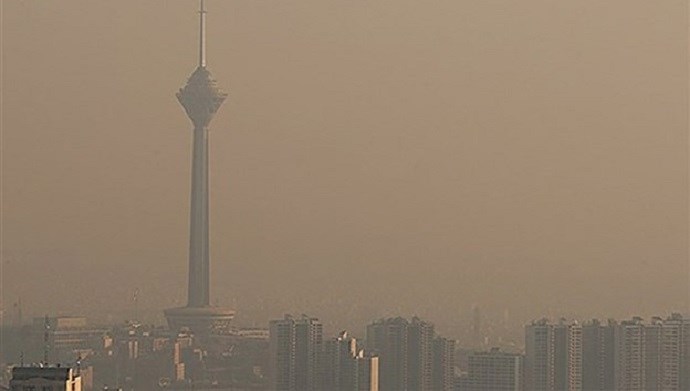

Since December 11, 23 provinces in Iran have been in a complete shutdown, and other provinces are partially shut down due to fuel shortages, power outages, and air pollution.
The closure of schools and government offices, officially attributed to air pollution and severe cold but actually due to fuel shortages and power outages, continues in many areas. Even universities have been closed, and it has been officially announced that classes will be held online until the end of the semester.
In addition to universities and government offices, the head of Tehran’s Chamber of Guilds announced, “Large non-essential goods stores must shut down, and if they fail to comply, they will be sealed.” (Tasnim News Agency, December 16, 2024).
Since December 12, intermittent power outages have started in major cities, particularly in Tehran. Initially, government officials claimed the outages were to avoid using heavy fuel oil (mazut) in power plants and to prevent air pollution. However, in recent days, cities such as Tehran, Tabriz, Mashhad, Arak, and Alborz have experienced severe air pollution due to mazut burning in power plants. Government sources admit that air pollution-related deaths in the country reach up to 50,000 annually. One of the main causes of these tragic deaths is mazut burning. These same sources state, “The renewed order for mazut burning, according to medical evidence, was essentially an order to kill people.” (Javan Online and Tabnak websites, December 13, 2024). This is despite the government’s previous promises to halt the use of mazut.
The economic pressure from power outages and business shutdowns primarily affects workers, laborers, and small business owners, who are unable to sustain even a minimum standard of living due to unemployment.
Under the unbearable pressures of these conditions, the sound of protests and curses against the regime’s leaders can be heard everywhere, from queues and waiting lines to buses and taxis.
In this explosive situation, regime officials are using tactics to feign alignment with the people. In a speech, Majlis Speaker Mohammad Bagher Ghalibaf stated, “It’s unacceptable that our country holds the world’s top rank in oil and gas, yet we are in this state today… Why can’t we fix it?” (State TV, December 21, 2024). Regime president Masoud Pezeshkian, who alternates between supporting regime supreme leader Ali Khamenei and criticizing the country’s situation, recently said, “After 40 years, we should not be in a position where we cannot provide services to many parts of the country” (State TV, December 21, 2024).
Few are unaware that the government and Khamenei’s policies are to blame for this situation, having squandered the nation’s wealth and resources on warmongering, terrorism, and repression, while continuing to plunder electricity and fuel even under these dire conditions. Government sources admit that “Iran is one of the region’s largest electricity exporters, supplying over 40% of Iraq’s electricity” (Faraaz website, December 17, 2024).
Moreover, 20 to 30 million liters of gasoline and fuel are smuggled out of the country daily by the Islamic Revolutionary Guard Corps (IRGC), and a significant amount of the nation’s electricity is consumed by cryptocurrency farms monopolized by the IRGC.
The regime’s desperation, exacerbated by the downfall of the despised Assad dictatorship—its closest ally in the region—and the squandering of tens of billions of Khamenei’s discretionary funds, has triggered an internal crisis. Coupled with public outrage over these unbearable conditions and escalating economic hardships, this situation reveals that the freezing of the country is a fire smoldering beneath the ashes. The criminal regime has no escape from the eruption of the people’s wrath and rebellion.