

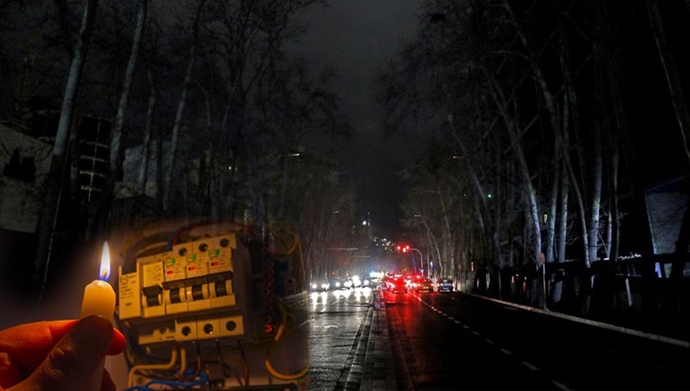

The return of two-hour power outages to Tehran on the eve of winter once again exposes the scale of Iran’s energy crisis. The clerical regime has officially announced the start of scheduled blackouts beginning on November 22 due to gas shortages—an unfolding crisis in a country sitting on a sea of oil and gas and ranked among the richest nations in the world in energy resources.
While a report by the state-run Entekhab website on the return of the outages attempts to justify the measure under the pretext of “energy management” and preventing the burning of mazut, it actually amounts to a fresh admission of the regime’s inability to meet the most basic needs of its citizens. How can a regime that has controlled the country’s vast resources for decades—yet remains unable to supply the electricity and gas citizens need in winter—claim to be capable of managing the economy of a country with such immense potential?
The issue is not merely a gas shortage or limited power generation; rather, it stems from the destruction of infrastructure, the looting of national wealth, and policies that have brought the Iranian people nothing but deeper poverty and deprivation.
At a time when citizens are forced to worry about heating their homes and securing electricity for their daily lives, the regime is now demanding that they cut back on gas and electricity consumption, shifting the burden of its own failures in managing the power grid onto the public. Calling for energy conservation—when poor and deprived families bear the brunt of blackouts and energy shortages—cannot substitute for accountability regarding the fate of the country’s resources and national wealth.
Furthermore, the repercussions of power outages are not confined to household life; they extend to factories, workshops, manufacturing units, and small businesses, all of which are hurt by energy restrictions. Declining production, disrupted economic activity, rising costs, and worsening unemployment are all consequences that the energy crisis can inflict on citizens’ lives and livelihoods.
In her latest statement on the issue, Mrs. Maryam Rajavi, president-elect of the National Council of Resistance of Iran (NCRI), said, “Power outages in Iran, a country sitting on a sea of oil and gas, make life even harder for the deprived and oppressed people, especially during cold winter days.”
Mrs. Rajavi stressed that the mullahs have brought nothing to the people of Iran “except looting and plundering the public’s wealth and destroying infrastructure.”
“Protest and resistance are the only ways to respond to a regime under which poverty, discrimination, and corruption grow worse every day as it remains in power,” she added.
The electricity crisis is more than just a technical or economic issue. It is directly tied to the broader crisis within Iran’s ruling system. From this perspective, power outages are neither a passing incident nor simply the result of higher consumption during the cold season; they are part of a wider reality in which the nation’s resources are diverted away from the welfare and needs of the people, resulting in crumbling infrastructure and widening deprivation.
The fundamental contradiction lies right here: a country possessing such immense oil and gas wealth should not leave its people in winter facing power cuts, gas shortages, and anxiety over how to heat their homes.
The return of blackouts once again confronts Iranian society with a pressing question: why should the people pay the price for the policies and performance of a regime that controls the nation’s wealth and infrastructure, yet fails to meet citizens’ most basic needs?
As long as the plundering of national wealth, the destruction of infrastructure, poverty, discrimination, and corruption persist, economic and livelihood crises will continue to cast a shadow over citizens’ lives. It is clear that the way to confront this reality lies in the people’s protest and resistance against these conditions.