

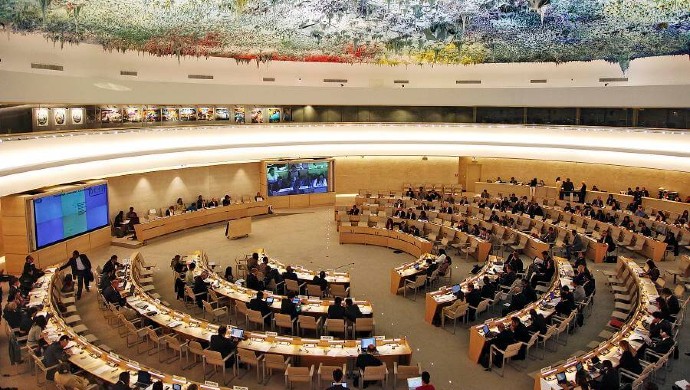

On November 18, 2026, the United Nations General Assembly’s Third Committee adopted a resolution condemning the Iranian regime’s grave and systematic human rights violations, marking the 73rd UN resolution denouncing Tehran’s human rights record. The resolution was adopted with 76 votes in favor, 27 against, and 64 abstentions.
The resolution highlights the Iranian regime’s extensive use of the death penalty as an instrument of political repression, its crackdown on protesters, and the widespread abuse of fundamental rights. The committee’s adoption precedes consideration by the full General Assembly.
Yet even as the international community was deliberating over these violations, the regime continued its executions. At least 13 prisoners were hanged on November 17 and 18, underscoring the widening gap between repeated international condemnations and the regime’s conduct.
The resolution represents another important recognition of the systematic nature of repression in Iran. But after decades of similar condemnations, it also raises a fundamental question: What must the international community do to end the cycle of executions, torture, and impunity?
A comprehensive condemnation of systematic repression
The resolution addresses a wide range of violations that have characterized the Iranian regime’s treatment of its population. Central to its findings is the escalating use of capital punishment, particularly executions based on security-related accusations, as a means of suppressing political dissent.
It condemns executions carried out following unfair trials, forced confessions obtained through torture, and the continued execution of people for offenses committed before the age of 18.
The resolution also highlights the systematic discrimination and repression targeting women and girls, ethnic and religious minorities, and those exercising their fundamental freedoms.
Particular attention is given to the regime’s violent response to the January 2026 uprising, including the killing of protesters, mass arbitrary detentions, and internet shutdowns aimed at concealing the crackdown.
Significantly, the resolution expresses grave concern over findings by the UN Independent International Fact-Finding Mission that numerous documented human rights violations may amount to crimes against humanity.
Executions continue as the regime seeks to suppress dissent
The regime’s accelerating execution campaign provides stark evidence of the urgency of the UN resolution.
In the 147th week of the “No to Executions Tuesdays” campaign, on November 17, prisoners participating in the movement reported that more than 607 people, including 21 women, had been executed between March 21 and November 17, 2026.
The execution campaign has also targeted people arrested during the January 2026 uprising. Meanwhile, other political prisoners remain under imminent threat. Capital punishment has become intertwined with the regime’s efforts to intimidate protesters and prevent future uprisings. Rather than addressing the public grievances behind nationwide protests, Tehran has increasingly relied on imprisonment and executions to maintain control.
Seventy-three resolutions and decades of impunity
The adoption of the 73rd resolution reflects decades of international concern over the Iranian regime’s human rights record. Yet the persistence of executions, arbitrary detention, torture, and the suppression of dissent demonstrates the limitations of condemnation without accountability.
The roots of this impunity extend back to the regime’s earliest years, including the 1988 massacre of political prisoners, when thousands were executed following summary proceedings. The perpetrators of these crimes have largely escaped accountability.
The UN General Assembly’s 72nd resolution, adopted in December 2025, explicitly addressed the 1988 massacre and the continued impunity of those responsible.
The latest resolution reinforces the need to examine ongoing violations in the context of this historical pattern. Without accountability for past crimes, the institutions responsible for repression have been able to continue their practices.
The international community must move beyond condemnation
Following the adoption of the resolution, Maryam Rajavi, President-elect of the National Council of Resistance of Iran (NCRI), welcomed the decision but stressed that it reflected only a fraction of the regime’s crimes over the past decades.
While the resolution adopted by the Third Committee of the United Nations General Assembly covers only a small portion of the crimes committed by the clerical regime in Iran, it leaves no doubt that the regime would not survive a single day without repression, torture,… pic.twitter.com/Sq3q3cpS4M
— Maryam Rajavi (@Maryam_Rajavi) November 18, 2026
Mrs. Rajavi called for the regime’s human rights record to be referred to the UN Security Council and for its leaders and officials responsible for crimes against humanity and genocide to be brought to justice.
She also urged the United Nations, member states, and human rights organizations to take immediate measures to halt executions, save prisoners facing death sentences, and secure the release of political prisoners. She emphasized the need for international fact-finding missions to visit Iranian prisons and meet with inmates, particularly political prisoners.
These demands highlight the urgency of translating international condemnation into concrete action.
The international community must make the protection of human rights a central element of its policy toward Tehran. This includes sustained pressure to end executions, independent monitoring of detention facilities, the preservation of evidence of serious violations, and meaningful accountability for perpetrators.