

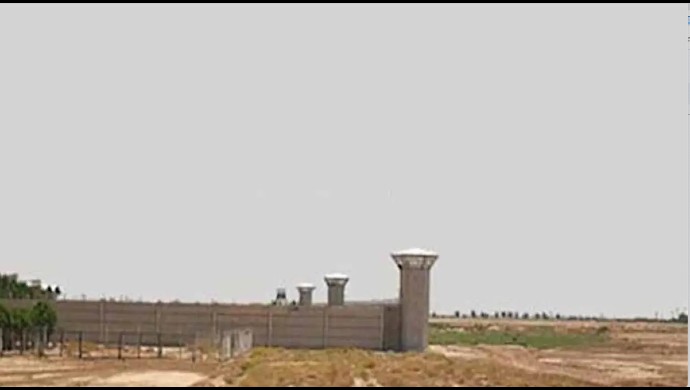

A comprehensive report released by the Iran Human Rights Society on August 22, 2026, reveals that more than 600 political and ideological prisoners are currently detained under dire conditions in Sheiban Central Prison in Ahvaz. Following extensive waves of arrests by regime security and intelligence forces across Khuzestan Province, the facility’s total inmate population has surged to over 4,000—more than double its official 2,000-person capacity. The vast majority of those recently detained are young men aged 18 to 25, who are being subjected to summary, video-conferenced mass trials inside the prison, denied independent legal counsel, and handed sentences ranging from lengthy prison terms to capital punishment.
Sheiban Prison Key Human Rights Indicators
| Indicator | Documented Data |
| Total Political & Ideological Prisoners | Over 600 inmates |
| Distribution of Political Prisoners | Ward 8: 185 |
| Official Prison Capacity | Approx. 2,000 inmates |
| Current Estimated Total Inmate Population | Over 4,000 inmates (Over 200% capacity) |
| Demographic Profile of Recent Detainees | Primarily youth aged 18 to 25 |
| Primary Locations of Arrests | Ahvaz, Shadegan, Izeh, Behbahan, and Masjed Soleyman |
| Primary Documented Violations | Complete denial of legal representation, group video-trials, arbitrary charges, medical neglect |
Sweeping Arrests Targeting Youth Across Khuzestan
Intelligence units of the Islamic Revolutionary Guard Corps (IRGC) and state security apparatuses have carried out extensive nighttime raids targeting residential neighborhoods across Khuzestan Province, particularly in Ahvaz, Shadegan, Izeh, Behbahan, and Masjed Soleyman. Hundreds of young citizens have been arbitrarily detained without judicial warrants and initially held in undisclosed interrogation centers before being transferred to Sheiban Prison. Families have systematically been denied information regarding the official charges, detainee whereabouts, or legal status.
Summary Mass Trials and Imposition of Death Sentences
The report documents that judicial proceedings are being conducted inside the prison via video conference in group formats, severely undermining the right to a fair defense. Detainees are barred from reviewing their case files or consulting with independent defense attorneys.
Presided over by Judge Ehsan Adibimehr of Branch 1 of the Ahvaz Revolutionary Court—widely cited by human rights advocates for handing down disproportionate and punitive rulings—the court has issued severe sentences on cookie-cutter security charges, including:
- Death Sentences: Three political prisoners—Masoud Jamei, Farshad Etemadifar, and Alireza Mardasi—have been sentenced to death.
- Severe Prison Sentences: Sentences ranging from 5 to over 20 years (including rulings of 20 years and one day, and 15 years and one day).
- Fabricated Charges: Allegations frequently leveled include “acting against national security,” “espionage for Israel and Mossad,” “propaganda against the state,” and “membership in opposition groups.”
Critical Overcrowding in Quarantine and Prolonged Incommunicado Detention
Over 310 newly detained individuals are being held indefinitely in the prison’s quarantine wing under severe confinement, lacking basic hygiene facilities, clean water, adequate ventilation, and medical care. Prolonged detention in quarantine units without formal processing or access to phone calls and visits constitutes a serious form of psychological and physical pressure.
Sheiban Prison also holds long-term political prisoners, including Gholamhossein Kalbi (one of the country’s longest-held political prisoners), alongside numerous other detainees.
Human rights monitors and independent bodies are calling on the United Nations High Commissioner for Human Rights (OHCHR) and international monitoring missions to demand immediate access to Sheiban Prison, halt all pending executions, and secure the unconditional release of arbitrarily detained political and ideological prisoners.