

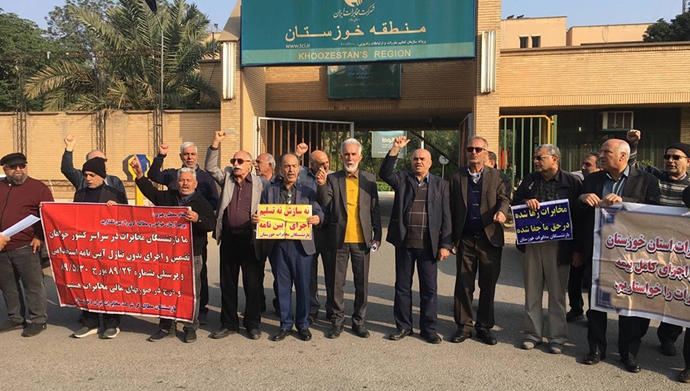

On January 13, Iran witnessed widespread protests across multiple cities. Retirees, teachers, and workers took to the streets, voicing their anger against unjust economic policies and systemic corruption, particularly within institutions like the Execution of Imam Khomeini’s Order (EIKO) and the IRGC Cooperative Foundation. Protesters demanded the restoration of their stolen rights, an end to discrimination, and decisive action against pervasive corruption that has worsened their living conditions. These protests are emblematic of growing public outrage and rejection of the current situation under the mullahs’ regime.
January 13—Tehran, Iran
Recently retired teachers and educators resume weekly rallies to protest low pensions and unpaid retirement bonuses despite the passage of 16 months.
Protesters chant, "Educators are aware and despise discrimination"#IranProtestshttps://t.co/Jv5IIugMW0— People's Mojahedin Organization of Iran (PMOI/MEK) (@Mojahedineng) January 13, 2025
In Tehran, retired educators organized a protest, demanding the payment of 60% of their end-of-service benefits, long overdue. Under the banner: “The teacher is aware and despises discrimination,” they decried discriminatory policies and the neglect of their rights. Their plea was clear—justice and the end of years of systemic injustice.
In Sardar Jangal Street, also in Tehran, retired telecommunications employees protested against the exploitative practices of EIKO and the IRGC Cooperative Foundation. They called for the return of their stolen funds and emphasized the need for transparency in managing their financial entitlements.
January 13—Kermanshah, western Iran
Retirees of the Telecommunication Company of Iran (TCI) continue protests as authorities refrain from addressing their demands.
Protesters chant, "Retirees rise against tyranny and discrimination"#IranProtestspic.twitter.com/Ntd4c0csoB— People's Mojahedin Organization of Iran (PMOI/MEK) (@Mojahedineng) January 13, 2025
In Kermanshah, retired telecommunications workers staged a demonstration, denouncing the theft of their rights by government-linked entities. They demanded the return of their misappropriated funds and an end to corruption plaguing these institutions. Protesters chanted, “Retirees rise against tyranny and discrimination.”
In Ilam, retirees gathered outside the central telecommunications office, protesting the disregard for their financial entitlements. They held EIKO and the IRGC Cooperative Foundation responsible for the injustices and called for immediate measures to improve their living conditions.
January 13—Ahvaz, southwest Iran
Retirees of the Telecommunication Company of Iran (TCI) resume protest rallies, demanding higher pensions and other basic needs based on the regime's own laws.#IranProtestspic.twitter.com/42Z3aW0zVs— People's Mojahedin Organization of Iran (PMOI/MEK) (@Mojahedineng) January 13, 2025
In Ahvaz, telecommunications retirees organized a rally and march, criticizing EIKO and the IRGC Cooperative Foundation for their exploitative practices. Their demands included the restoration of their funds and an end to the injustices they face.
In Urmia, retirees from the telecommunications sector in West Azerbaijan Province staged a protest, expressing frustration over the non-implementation of laws related to their rights and benefits. They called for the immediate enforcement of these regulations.
January 13—Urmia, northwest Iran
Retirees of the Telecommunication Company of Iran (TCI) resume protest rallies, demanding higher pensions and other basic needs based on the regime's own laws. #IranProtests pic.twitter.com/4KDo7DVHrb— People's Mojahedin Organization of Iran (PMOI/MEK) (@Mojahedineng) January 13, 2025
In Sanandaj, retirees gathered in front of the telecommunications company in Kurdistan Province, condemning the failure to implement approved regulations. They demanded accountability and the return of their stolen rights.
In Marivan, telecommunications retirees protested outside the local company office, urging the cessation of rights violations and the return of their embezzled funds.
In Bijar, retirees voiced their anger over the theft of their rights by EIKO and the IRGC Cooperative Foundation. They rejected systemic corruption and demanded the restitution of their rights and an end to discriminatory practices.
January 13—Shahrekord, western Iran
Retirees of the Telecommunication Company of Iran (TCI) hold protest rally in front of the TCI headquarters, demanding higher pensions and other basic needs based on the regime's own laws.#IranProtests pic.twitter.com/9XLn1ITsTW— People's Mojahedin Organization of Iran (PMOI/MEK) (@Mojahedineng) January 13, 2025
In Shahrekord in Chaharmahal and Bakhtiari Province, telecommunications retirees organized a protest, calling for accountability and the full restoration of their stolen entitlements.
In Shiraz, telecommunications retirees in Fars Province gathered to decry widespread corruption. They demanded improved living conditions and the return of their financial rights.
In Isfahan, retirees held a demonstration to denounce regime policies targeting their rights. Their calls focused on curbing corruption and ensuring their rightful entitlements. Protesters chanted, “EIKO and IRGC have stolen our rights.”
January 13—Isfahan, central Iran
Retirees of the Telecommunication Company of Iran (TCI) continue protests as authorities refrain from addressing their demands.
Protesters chant, "Regime institutions have stolen our rights"#IranProtestspic.twitter.com/hmyz5Xjo0f— People's Mojahedin Organization of Iran (PMOI/MEK) (@Mojahedineng) January 13, 2025
The protests that have erupted across Iran reflect an intensifying wave of public frustration over deteriorating economic and social conditions. Retirees, workers, and teachers have united to send a clear message about the widening gap between the Iranian people and the oppressive regime. Their slogans highlight demands for justice, transparency, and improved livelihoods. Ignoring these calls will only exacerbate tensions, leading to broader unrest, posing one of the most significant challenges to the regime in recent years.