


In an article published on Welt.de, Mrs. Maryam Rajavi, the president-elect of the National Council of Resistance of Iran (NCRI), presents her perspective on how the fall of Bashar al-Assad in Syria has significantly weakened Iran’s ruling regime. Rajavi argues that the time is ripe for a well-organized resistance to orchestrate a regime change in Tehran. Her article discusses the vulnerabilities of Iran’s theocratic government, the growing discontent within Iranian society, and the roadmap for establishing a democratic Iran.
Strategic Blow to Tehran
Maryam Rajavi highlighted the strategic implications of Assad’s downfall, stating that it marks a “devastating blow” to the Iranian regime, which had heavily relied on its alliance with Assad for regional influence. “Syria was the backbone of the regime in the region,” she wrote, noting that the Revolutionary Guards (IRGC) had used Syria to connect to the Mediterranean, Lebanon, and Hezbollah. Rajavi revealed that Iran invested “at least $50 billion in Syria between 2012 and 2020” in a bid to keep Assad in power, but this strategy has now “completely failed.”
The collapse of Assad’s forces, Rajavi noted, demonstrates the vulnerability of Tehran’s armed proxies. “The heavily armed forces of Assad and tens of thousands of Quds Force fighters melted away like snow in the summer sun,” she writes. This development, she argues, exposes the regime’s efforts to project strength as mere “deception.”
Mounting Domestic Unrest
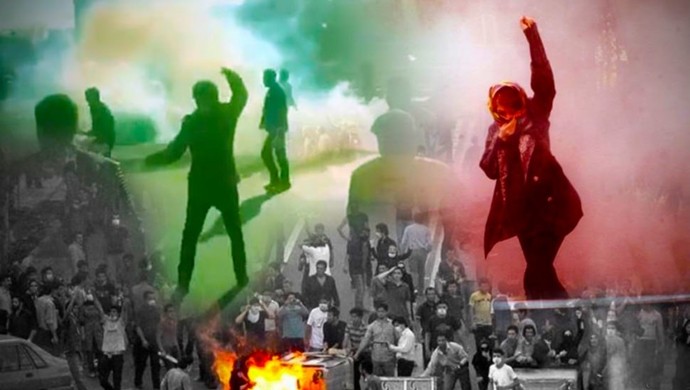
Mrs. Rajavi connected this regional setback to the domestic situation in Iran, describing the regime as being at its “most vulnerable position in decades.” She underscored the societal unrest fueled by economic collapse, rampant inflation, unemployment, and institutional corruption. “The factors that led to four nationwide uprisings in the past six years have only intensified,” she wrote. The regime’s response, according to Rajavi, has been a “wave of executions unprecedented in scale,” with “over 600 executions in less than five months.”
Women, in particular, face severe oppression, which Rajavi identified as a significant factor in mobilizing societal resistance. She emphasized that “the suppression of women” is central to the regime’s repressive measures.
A Message of Hope for Change
Despite the challenges, Rajavi conveyed optimism about the potential for change. “The Iranian society is waiting for the next spark to ignite another uprising,” she stated. Assad’s downfall, she argued, sends a clear message to Iran’s youth: “The ruling mullahs and their Revolutionary Guards are weakened and vulnerable.”
Mrs. Rajavi warned that the regime will likely intensify its nuclear program in a desperate attempt to regain lost ground. However, she asserted that the solution lies not in external pressure alone but in a “homegrown approach.” She identified three prerequisites for regime change: “an organized resistance with thousands of experienced members,” “a democratic alternative with broad social support and international recognition,” and “a practical roadmap for regime change.”
A Vision for a Free Iran
Mrs. Rajavi outlined the NCRI’s vision for a democratic Iran. Following the regime’s fall, a transitional government would be formed for a maximum of six months to organize “free and fair elections for a constituent assembly.” Power would then transfer to representatives elected by the people, who would draft a constitution for the new republic.
The NCRI envisions an Iran based on democratic principles, including gender equality, religious freedom, and the separation of religion and state. “A free Iran will uphold ballot boxes as the sole criterion for legitimacy,” Rajavi said. The plan also emphasizes peace in the Middle East and the pursuit of a nuclear-free Iran.
The Role of International Community
Mrs. Rajavi stressed the importance of international support, particularly from the European Union. She called on the EU to “recognize the right of the Iranian people and their resistance to overthrow the regime.” Additionally, she urged concrete actions against Tehran for “its suppression of the people, terrorism, warmongering, and nuclear weapons development.”
Mrs. Rajavi concluded with a call for solidarity: “This policy serves peace and stability in the region and the world and places Europe alongside the Iranian people in their quest for freedom.”