

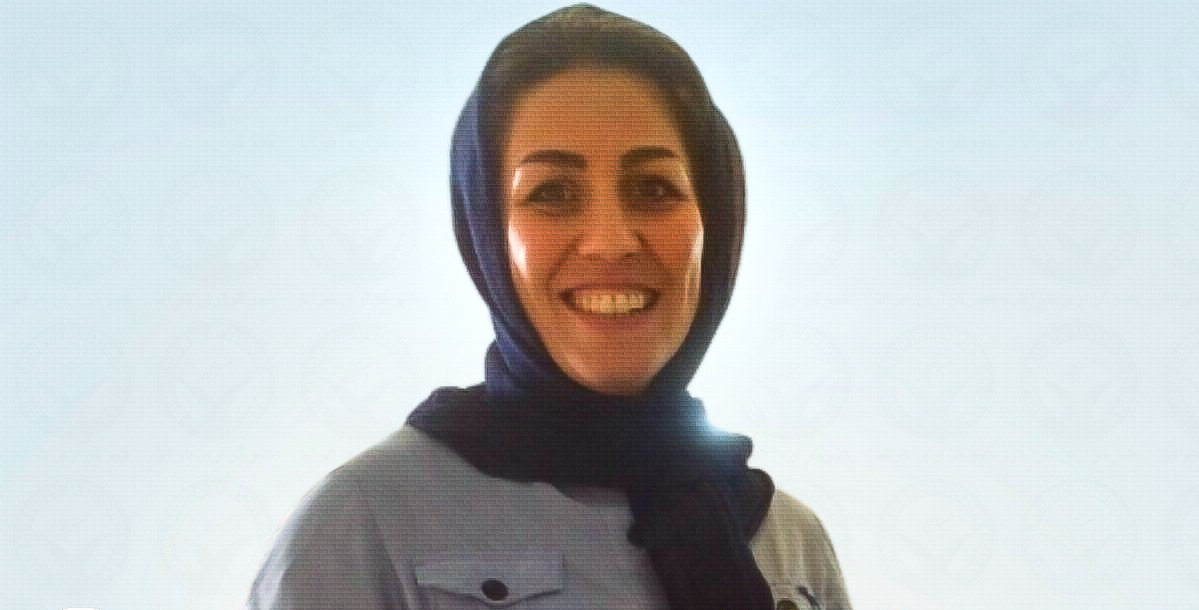

Iranian political prisoner Maryam Akbari Monfared was due to complete her 15-year sentence on October 12, 2024. Despite spending the entire sentence without a single day of medical leave, the Iranian regime’s judiciary has blocked her release by imposing an additional sentence. According to the regime’s own laws, Akbari, one of the longest-serving female political prisoners in Iran, should have been freed in 2019 after serving 10 years. Her case has become emblematic of the regime’s cruelty and determination to suppress dissent, particularly from those who dare to seek justice for past atrocities.
As previously noted by the Secretariat and Women’s Committee of the National Council of Resistance of Iran (NCRI), the Ministry of Intelligence fabricated two cases to block Akbari’s release. In two show trials held in Semnan and Evin, she received additional prison sentences. One charge was for “propaganda against the regime,” and the other was for “insulting the leadership, conspiracy, assembly, spreading lies, disturbing public opinion, and inciting people against national security.”
Akbari’s primary “crime” over the past decade has been her pursuit of justice for victims of the regime’s brutal human rights violations. Her own family has paid a heavy price for their political beliefs. Three of her brothers and one sister were executed by the regime for their involvement with the People’s Mojahedin Organization of Iran (PMOI. Alireza Akbari was executed in 1981, Gholamreza Akbari was tortured to death in 1985, and Abdolreza and Roghiyeh Akbari were among the victims of the 1988 massacre, in which over 30,000 political prisoners were executed in the span of a few months. Maryam’s relentless pursuit of justice for her murdered siblings has led to her own extended suffering.

Javaid Rehman, the UN Special Rapporteur, highlighted her case in his July report on “atrocity crimes” in Iran. He wrote: “One poignant example illustrating this pattern of harassment and persecution is the case of Maryam Akbari-Monfared, a political prisoner in the country. Ms. Akbari-Monfared displayed immense courage by filing an official complaint from inside prison on 15 October 2016, addressing the Iranian judiciary regarding the execution of her siblings during the 1988 massacre. In response to her pursuit of accountability, she has faced increased pressure while incarcerated, including the denial of visitations and her forced exile to a remote location, far from her children. Authorities have informed Ms. Akbari-Monfared that her release is contingent on retracting her call for accountability regarding her siblings’ murder. Despite enduring a 15-year sentence without a single day of furlough, including during the COVID-19 pandemic, Ms. Akbari-Monfared’s ordeal continues. On 1 July 2023, she was summoned to the Courthouse of Evin Prison and arraigned on five new charges, subsequently receiving an additional two-year sentence. Information from sources within the prison suggests that her continued detention is aimed at coercing her into renouncing her pursuit of accountability.”
In a cruel act, the Iranian regime’s judiciary issued a ruling in July 2024 to confiscate the assets of Maryam Akbari and her family due to her pursuit of justice for her three brothers and sister, who were executed. This move exemplifies the regime’s broader strategy of using financial, psychological, and physical pressure to break the will of political prisoners and their families.
Maryam Akbari Monfared’s ordeal is not an isolated case but part of a systematic campaign by the Iranian regime to crush political dissent, especially targeting those affiliated with the PMOI. The regime regularly fabricates charges, imposes severe sentences, and subjects prisoners to torture, denial of medical care, and prolonged solitary confinement.
In addition to Akbari, political prisoners across the country have been subject to intensified repression. Since the wave of protests in 2022, the regime has increased its use of the death penalty and other brutal tactics to intimidate dissidents. Recently, the regime sentenced PMOI supporters Behrouz Ehsani and Mehdi Hassani. Seven other political prisoners were recently put on trial on charges of supporting the PMOI and face the threat of execution.
In a statement, the Women’s Committee of the National Council of Resistance of Iran renewed its call to the UN High Commissioner and Human Rights Council, the Special Rapporteur on Human Rights in Iran, the Special Rapporteur on Violence Against Women, and other human rights and women’s rights organizations to strongly condemn the Iranian regime’s inhumane treatment of political prisoners, especially women, and to take immediate action for the release of Maryam Akbari.