

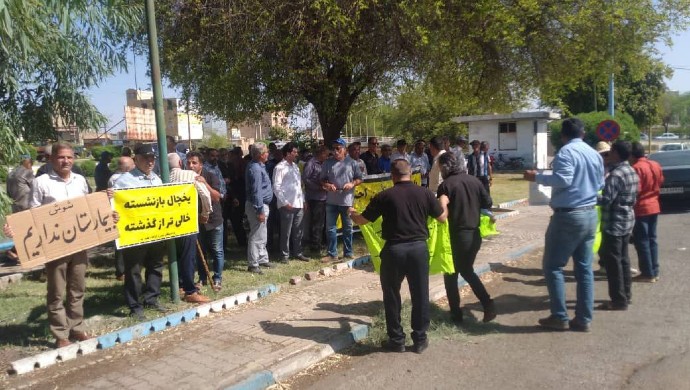

On Sunday, July 21, Iran witnessed a wave of protests across the country, highlighting widespread economic discontent among different segments of the population. Retirees, landowners, and other groups rallied in cities from Tehran to Zanjan, demanding increased pensions, improved living conditions, and changes to destructive government policies.
In Tehran, retirees from the Social Security Organization gathered to voice their ongoing demands for increased pensions and improved access to basic necessities. These protests mirrored similar gatherings in Ahvaz, Shush, and Kermanshah, where retirees chanted slogans condemning the government’s inability to meet their needs amid high inflation rates and the deteriorating value of the rial.
July 21—Tehran, #Iran
Retirees of the Social Security Organization rally to reiterate their demands for higher pensions and other basic needs.#IranProtests pic.twitter.com/7vi4pr2dI6— People's Mojahedin Organization of Iran (PMOI/MEK) (@Mojahedineng) July 21, 2024
In Kermanshah, the protests went beyond economic demands as demonstrators called for the release of jailed activists, including teachers and workers. The protesters also called for the release of Sharifeh Mohammadi, a labor activist who has been sentenced to death by the regime’s criminal judiciary.
Tehran also witnessed a separate protest by steel industry retirees who gathered in front of the Steel Retirement Fund office to demand improved pensions and basic rights. Likewise, in Isfahan, steel industry retirees echoed these demands, emphasizing the struggle to meet their basic needs as the cost of living continues to rise.
More footage of today's protest rally by retirees in Kermanshah.#Iran #IranProtestspic.twitter.com/00FR0PZGvI
— People's Mojahedin Organization of Iran (PMOI/MEK) (@Mojahedineng) July 21, 2024
According to the regime’s own laws, the government is responsible to provide the basic needs of retirees and adjust their pensions according to the costs of living. But as the rial continues to depreciate, inflation soars, and prices skyrocket, the regime refuses to raise their pensions and attend to their needs.
Dissatisfaction with pension systems also emerged in Damghan and Kerman. Retired miners in the eastern Alborz region and retired workers in Kerman organized rallies demanding increased pensions and access to health care. Their calls for support highlight the broader issue of insufficient social safety nets in the face of economic instability.
July 21—Damghan, northern #Iran
Retired mine workers of the East Alborz region hold protest rally, demanding higher pensions, access to healthcare, and other basic needs.#IranProtestspic.twitter.com/qCnloX1en3— People's Mojahedin Organization of Iran (PMOI/MEK) (@Mojahedineng) July 21, 2024
In addition, customers of the state-backed vehicle manufacturer Modiran protested at the Tehran International Auto Show against what they described as unfair and illegal price increases. Modiran is one of several state-backed vehicle manufacturers that are involved in major corruption cases, taking customer funds and refraining from delivering their cars or raising prices arbitrarily.
Landowners from the Khavaran district of Tabriz also gathered in Tehran, protesting outside the Ministry of Roads and Urban Development. They called on the government to fulfill its commitments to deliver promised homes, reflecting a common theme of unfulfilled government promises.
July 21—Tehran, #Iran
Landowners of the Khavaran district of Tabriz rally in front of the Ministry of Roads & Urban Development to protest the government not upholding its commitments to deliver homes to them.#IranProtestspic.twitter.com/qDsjpCRDFt— People's Mojahedin Organization of Iran (PMOI/MEK) (@Mojahedineng) July 21, 2024
In Zanjan, northwest Iran, customers of the M2 housing project gathered to protest the delay in handing over their homes, which were due under contract in January. This protest further highlights widespread frustration with government incompetence and broken promises.
The wave of protests on July 21 indicates growing unrest across Iran, as various groups face economic hardship and demand government accountability. As inflation rates continue to rise and the economic crisis worsens, the Iranian regime is facing increasing pressure from its citizens, who have long run out of patience. The ongoing protests indicate a growing willingness among the population to challenge the status quo and demand fundamental changes. These protests are coming on the heels of a sham presidential election, where regime officials and the new president, Massoud Pezeshkian, have promised to address the economic and social woes of the population.