

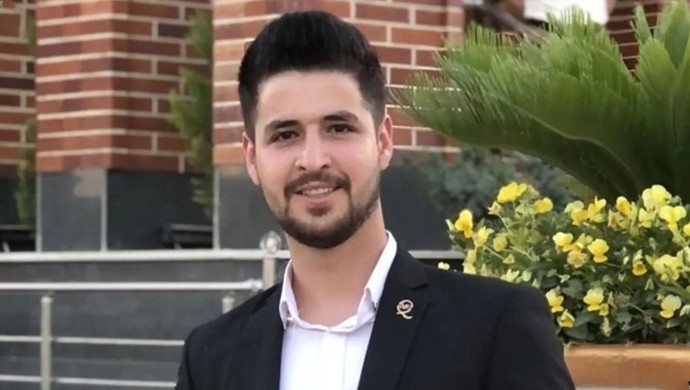

Iranian authorities in Ghezel Hesar prison, Karaj, executed political prisoner Mohammad Ghobadlou on Tuesday, January 23, 2024, for taking part in anti-regime protests.
Ghobadlou, 23, was arrested in Tehran in October 2022, during the nationwide uprisings that erupted after the regime’s security forces murdered a young girl, Mahsa Amini, for violating the regime’s hijab rules.
He was charged with the murder of one of the repressive forces who had been dispatched to suppress the protests. His case was overseen by Abolghasem Salavati, a notorious judge under U.S. and European sanctions for his role in human rights abuses, especially against dissidents.
Ghobadlou was denied access to a lawyer of his choosing and was appointed an attorney by the court. He was charged with “Corruption on Earth” and sentenced to death despite a severely flawed judicial process and lack of evidence aside from confessions obtained under torture.
The regime upheld the death sentence despite international calls for revoking it.
On Monday, January 22, 2024, news broke of Ghobadlou’s imminent execution in Ghezel Hesar prison. International human rights organizations called for a halt to the sentence.
“The case of this young man with a disability arrested in connection with the 2022 protests has been marred by torture and secretive proceedings,” Amnesty International wrote on its X account calling on the regime to stop the execution.
The head of the judiciary must STOP the arbitrary execution of Mohamed Ghobadlou, suddenly & unlawfully scheduled for tomorrow. The case of this young man with a disability arrested in connection with the 2022 protests has been marred by torture and secretive proceedings. pic.twitter.com/NuGkb4YGg3
— Amnesty Iran (@AmnestyIran) January 22, 2024
Mrs. Maryam Rajavi, the president-elect of the National Council of Resistance of Iran (NCRI), called on the UN to intervene to save the life of Ghobadlou and other political prisoners on death row, including Sunni political prisoner Farhad Salimi.
“In these critical moments, I appeal for swift intervention from the UN and its pertinent agencies, specifically the Human Rights Council, the UN High Commissioner for Human Rights, the UN Special Rapporteur for human rights in #Iran, and the UN Special Rapporteur on the death penalty,” Mrs. Rajavi said. “It is imperative that collective efforts are made to save the lives of Mohammad and Farhad.”
Mrs. Rajavi also called on the people of Iran to protest the imminent execution.
.@UNHumanRights @UN_HRC
I earnestly urge all my fellow citizens, especially the youth in Tehran and Alborz, to protest against the unjust verdict condemning imprisoned protester, #MohammadGhobadlou, and Sunni political prisoner Farhad Salimi to execution. Both have been…— Maryam Rajavi (@Maryam_Rajavi) January 22, 2024
Ghobadlou’s lawyer declared that the sentence was illegal based on the regime’s own laws. On Monday night, a group of people rallied in front of the prison to call for an immediate halt to the sentence.
The regime nonetheless carried out the execution on Tuesday morning. Its criminal judiciary declared that the execution was carried out under its barbaric law of “Retribution in Kind.”
Ghobadlou is the ninth political prisoner to be executed in relation to Iran’s 2022 nationwide uprising. The previous case was political prisoner Milad Zohrevand, 21, executed in Hamedan on November 23, 2023.
During the uprising, regime security forces killed more than 750 civilians and arrested tens of thousands. Dozens were sentenced to death. Prisoners were brutally tortured and mistreated and several prisoners committed suicide after their release due to the stress caused by the torture and reports that regime authorities injected them with drugs that caused severe depression.