

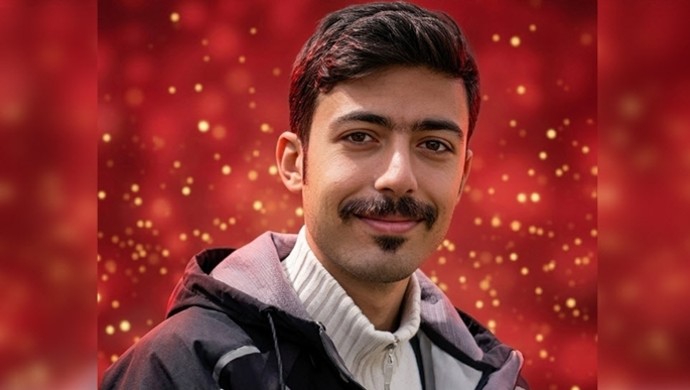

The executions carried out in Ghezel Hesar Prison between March 30 and April 4, 2026, in which six imprisoned PMOI/MEK members—Vahid Bani Amerian, Mohammad Taghavi, Babak Alipour, Pouya Ghabadi, Akbar Daneshvarkar, and Abolhassan Montazer—were put to death, stand as a stark reminder of the Iranian regime’s determination to crush organized resistance.
These six individuals were not isolated political prisoners; they were members of one of the PMOI’s Resistance Units, a network that has come to symbolize defiance, sacrifice, and persistence in the face of relentless repression. Their execution was meant to silence them, yet their lives and final words have only deepened public understanding of the spirit and structure of these Resistance Units.
From inside prison, they sent numerous letters and messages to the outside world—testimonies that offer a rare and powerful window into the identity, conviction, and resilience of the PMOI’s Resistance Units and their unwavering struggle. Reading or listening to these messages provides a clearer picture of their commitment to resistance and the moral strength that sustained them under extreme pressure.
Among these voices, the final defense of Vahid Bani Amerian stands out as an especially vivid and revealing example. Even in the shadow of execution, his words could not be erased. Some voices are not silenced by prison walls; rather, they grow stronger precisely because power tries so desperately to extinguish them.
Vahid Bani Amerian spoke not as a man pleading for mercy, but as a political prisoner and member of the PMOI, determined to leave behind a moral testimony. In his final statement, recorded after he had been sentenced to death, Bani Amerian made clear why he wanted the video released: “I want to make my defense public.” That sentence alone reveals the heart of his stand.
He did not want the world to remember him only as another name in a death sentence, another body hidden by the machinery of repression. He wanted people to hear him directly, in his own words and with his own courage, as a man who chose to join the PMOI Resistance Units. At the same time, his statement sheds light on the PMOI Resistance Units, reflecting their bravery, sacrifice, and steadfast commitment to the cause of freedom.
What gives his statement such emotional force is that it is not centered on fear of death. Again and again, he shifts attention away from himself and toward the suffering of others. He rejects the comfort of silence. He rejects the idea that a person can witness injustice and still live an “ordinary life” with a clear conscience. In one of the most striking lines of his defense, he says: “May that kind of life be forbidden to me if the price of it is stepping on my conscience and closing my eyes to the pain of my people.”
That is the essence of his message. For Bani Amerian, resistance was not presented as heroism for its own sake. It was a moral necessity. He describes a life in which the pain of others became impossible to ignore: impoverished Baluchi children, child street vendors, and parents unable to pay for a child’s surgery. These images are what fill his statement with grief and humanity. He was not speaking in abstractions. He was speaking about real suffering, seen with his own eyes, carried in his memory, and transformed into conviction.
One of the most heartbreaking passages in his defense is his recollection of a desperate family outside a hospital in Kermanshah. He remembers a father asking how he could ever gather enough money for his child’s operation on a laborer’s wage, and a mother crying out, “O God, O justice!” In repeating that moment, Bani Amerian makes clear that his resistance did not come from ideology alone. It came from witnessing humiliation, poverty, and injustice so profound that silence itself became unbearable.
That is why he answers the regime’s question about “wasting” his youth with defiance rather than apology. “Life is belief—and struggle in the path of that belief,” he says. In that line, life is not measured by safety, career, or personal advancement. It is measured by fidelity to conscience. Even under a death sentence, he insists that he does not go to sleep fearing the gallows; instead, he lies awake with “the pain of my people” in his mind.
His final defense is also a rejection of the legitimacy of the court that condemned him. Human rights organizations reported that men in this case were sentenced after proceedings widely denounced as unfair and torture-tainted. In his own words, Bani Amerian strips the performance of justice bare: “We were under torture the entire time—both psychological and physical torture—from the moment we were arrested.” He does not speak as someone who expects fairness from such a system. He speaks as someone exposing it.
Yet perhaps the most powerful aspect of his statement is that he refuses to let the regime define him merely as a defendant. When asked for his final defense, he turns the question back on his judges: “Am I the one who should defend myself—or are you?” It is an extraordinary reversal. The condemned man becomes the accuser. The prisoner speaks as though history itself will one day put the executioners on trial.
And still, even in that defiance, the emotional center of his statement remains the people of Iran. “I defend my oppressed people,” he says. He is not asking the audience to pity him. He is asking them to see the broader human landscape of repression: the bloodshed, the prisons, the broken families, the young lives cut short, and the unending cost paid by those who dare to resist.
His closing words are among the most unforgettable: “Even if you execute me and people like me, we will multiply.” Whether read politically, morally, or emotionally, this is the sentence of a man who believed that execution could kill a person but not erase a cause. It is the language of endurance. It is the language of someone who believed that courage, once spoken aloud, passes from one heart to another.
And then comes his oath: “I swear by the blood of my comrades: I will stand firm to the end.” There is no retreat in that line. No bargaining. No attempt to soften the cost. It is the testimony of a prisoner who knew exactly what the regime could do to him and chose to speak anyway.
Vahid Bani Amerian’s final defense should be understood not merely as the statement of one condemned prisoner, but as a revealing expression of the spirit that defines the PMOI/MEK Resistance Units. It reflects the endurance of political prisoners in Iran and, at the same time, illuminates the essential characteristics of these Resistance Units: steadfastness under repression, loyalty to a higher purpose, moral clarity in the face of brutality, and an unbroken commitment to resistance despite prison, torture, isolation, and the threat of execution. In this sense, his words speak not only for an individual, but for a broader generation of men and women whose struggle is rooted in political conviction, historical memory, conscience, sacrifice, and devotion to their people.
That is why this final message carries significance beyond the fate of a single prisoner. It stands as testimony to a broader culture of defiance embodied by the PMOI/MEK Resistance Units. It is not only a defense, but also a witness to the values that sustain these networks of resistance; not only a refusal to submit, but also an affirmation of the human and political strength that defines them. Above all, it demonstrates that even in the shadow of the gallows, there remain those who continue to stand firm—and that this steadfastness is one of the defining features of the Resistance Units themselves.
Vahid Bani Amerian’s Final Statement
Hello and greetings. My name is Vahid Bani Amerian. I am a 32-year-old political prisoner, and I am currently under a death sentence.
I am very glad that I am able to send this message to you—the people of Iran and the world—from behind the bars of Evin Prison.
The reason I insisted on this video being released, despite all the consequences it may have for us, is simple: I want to make my defense public.
This regime knows very well that it has no legitimacy. That is why it is terrified of making the trial of a political prisoner public.
So, to you, Supreme Leader—you who want to execute us, to spread fear in society this way, to stop the movement from growing, and to build a barrier against the revolution—I want to remind you of this:
I, and people like me, have risen from the blood of freedom-loving young people who, through all these years, remained nameless and unknown. Many never knew who they were, what they did, or what torture they endured in your regime’s dungeons. But they never bowed to you or to Khomeini. And by the thousands, they kissed the gallows.
So be certain of this: even if you execute me and people like me, we will multiply. Even if you hide our bodies. And be certain of this too: your regime will have no way to escape overthrow.
Along with five of my friends, I was sentenced to death in a court that had nothing in common with a real court. In dictatorships and fascist regimes, the judiciary and the security apparatus are pillars of repression and crime—they do not serve justice or law.
That is why our answers were very short. We do not recognize such a system at all, and we have nothing to say to it.
In short, what I said in court can be summed up in a few sentences:
We do not accept the charges you brought against us. We were under torture the entire time—both psychological and physical torture—from the moment we were arrested. And when the result of the trial has already been decided in advance, what difference does it make what answer we give? Please don’t trouble yourselves with this formal, fake trial. Based on the words of your Imam, anyone who remains steadfast is considered worthy of death and execution. Well then—I remain steadfast. That’s all.
That was our whole trial.
But now I want to publicly give my answer to the four questions raised in court, in front of the people, and directly address this regime.
Question 1:
Why didn’t you go back to a normal life after being released from prison? Why are you wasting your youth?
My answer to the regime is this:
May that kind of life be forbidden to me if the price of it is stepping on my conscience and closing my eyes to the pain of my people.
You miscalculated badly. I will not return to that normal life, and I will not allow you and your Revolutionary Guards to go on living your own comfortable “normal lives” while you continue looting, destroying, and massacring the people.
To me, this is the true beauty of life. Life is belief—and struggle in the path of that belief.
After I was released from prison, you yourselves exiled me to Bashagard. Now after seeing innocent Baluchi children with my own eyes—children in deprived huts, wasting away and dying from scorpion stings—was I supposed to stay silent?
And meanwhile, you sit back on your throne of power, funded by the people’s money and the blood of the youth, while continuing your massacres and destruction. You keep millions below the poverty line. You start wars. You continue your misogyny, your double oppression against ethnic groups, religions, and beliefs.
And then I’m supposed to quietly bury my head in my studies? In my personal life? In continuing my education?
Never. Never.
Let me say this very clearly: now that I am under a death sentence, at night I do not lay my head on the pillow thinking about your gallows in fear. I lay it down with the pain of my people in my mind.
Sometimes I think about the bitter fate of those child street vendors who used to stand smiling on the pedestrian bridge and sell things. They were in front of my eyes for four years. Maybe some of my classmates at Khajeh Nasir University remember them too. What happened to them? Where are they now, ten years later? What are they doing? What crime did they ever commit?
Many times, the cries of that poor father and mother still echo in my mind and in my ears and take sleep away from me. They were standing in front of a hospital in Kermanshah. Their sick child needed surgery, and they had no money. They were holding the child, and the father said, “How am I supposed to come up with that money on a worker’s wage? Am I supposed to let my child die?” And the mother, crying out in agony, said, “How can I let my child die? O God, O justice!”
And now you speak to me of a normal life?
You merchants of religion—you miscalculated badly.
Let me make this completely clear. Who are my role models? The Ashrafis. The very people whose name terrifies you. The ones who gave their youth, their whole lives, everything they had and everything they were, for the freedom of the people and the flourishing of this land—from Kurdistan to Baluchistan, from the reed marshes of Mahshahr to Azerbaijan, and in every single city of Iran.
Question 2:
The second question was whether we accept the charges against us.
My answer is: what charges?
To the clerical regime’s terrorist Ministry of Intelligence—and to the Shah’s torture-wielding SAVAK before it—we have always been accused of things like terrorism, endangering national security, rebellion, insurgency, and the like. We do not give those accusations the slightest value.
In fact, the more you accuse us, the more certain we become of our path.
But the accusation for which I was sentenced to death—and the one I am proud of—is support for the the People’s Mojahedin Organization of Iran: an organization that has stood by its word for sixty years, through suffering, torture, and blood; an organization that has pledged to wrest the destiny of the people out of the claws of tyranny and dependence, even with bare hands and teeth if necessary; and to bring the struggle that began with the Constitutional Revolution to its true destination—by transferring power to the people of Iran and establishing a democratic republic.
With honesty. With honor. With selfless sacrifice.
One hundred and twenty thousand martyrs.
An organization that has never paid ransom to anyone, and it never will.
And this is its alternative: Maryam Rajavi’s Ten-Point Plan—abolition of the death penalty, separation of religion and state, and so on.
And I am proud to be a small part of a resistance that acts and pays the price—not one of social media, showing off, and wave-riding.
Its leader is a woman: Maryam Rajavi. And you fear her deeply. She is your nightmare.
She stands filled with the pain and suffering of the people, standing at the highest peaks of responsibility and sacrifice.
Her commitment—listen carefully—is this:
“Our roadmap has been and remains this: if, to reach freedom, we must pass through the seven stages of repression, prison, torture, and firing squads; if, to reach freedom, we must pass through the seven stages of fabricated accusations and the dagger of betrayal; if, to reach freedom, we must pass through seven stages and seventy ordeals and tests—then yes, yes, in the battle for freedom, we are ready and prepared for hundreds more such trials.”
Question 3:
What is your final defense?
My answer to the executioners of this regime is this:
Am I the one who should defend myself—or are you?
You are the ones who must one day stand before a just people’s court after your overthrow and answer for every single crime you have committed over all these years.
And of course, in a court where your clerical Sharia has no place, you will still have the right to a lawyer. You will have the right to a public trial. And you should fear that day of reckoning that awaits you—both in this world and in the next.
But if you ask me, personally, I have no defense to make for myself.
I defend my oppressed people.
And I seek justice for all my dear brothers and sisters—those whose blood you spilled in the uprisings. From Khodanur, Kamar, and Rouzbeh, to Aylar, Hadis, and Sarina—and an endless line of the finest children of this land.
And the final question:
Will you not repent?
Right here, in a loud voice, I declare this:
For the freedom of Iran, not only will I not bargain with you over my life—because from the very first day I wrote my will and kept it under my head—but I have also made a firm decision to sacrifice, every day and every hour, even more than my life: my deepest feelings for those dearest to me, for the sake of this people. And I do not fear that.
Because if I, and my generation, and my friends—who in different prisons are now being sentenced to death on the same charge—my sisters and brothers, and all those under heavy sentences in prisons across the country or outside prison—if we do not pay this price, then future generations will have to pay far more.
So, if I am to repent, then I ask God’s forgiveness for all the days and hours when I had buried myself in my personal life.
And my final word to you executioners is this:
You, whose nature is the very same vile nature of 1988 massacre—our answer is the same.
My answer is this: if the price of staying alive is renouncing the name of “Mojahedin-e Khalq”, then shame on such a life. Let that life be yours.
Salute to all the honorable people of Iran.
I swear by the blood of my comrades: I will stand firm to the end.