

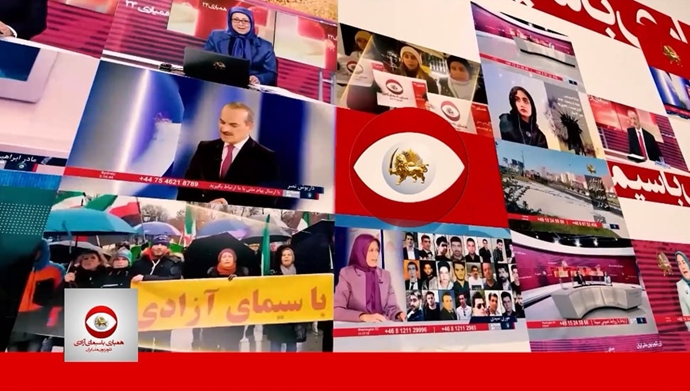

The 29th Hamyari telethon program for Simay Azadi, the TV network of the Iranian Resistance, was a display of the popular roots of the Iranian Resistance and its reliance on the people. However, even more significant were the human values that were put on display during the program, standing in stark contrast to a regime that, beyond plundering material wealth and national resources, has also tried to corrupt the social fabric and values of Iranian society.
In opposition to this inhumane regime that propagates greed, cruelty, and contempt for humanity and human relations, the Hamyari program with Simaye Azadi filled every viewer moment by moment with the noble values of generosity and sacrifice.
https://twitter.com/en_simayazadi/status/1882108836435402911
Many participants emphasized that the Hamyari program is the only place where people stand in line to give, to contribute, and to donate. They willingly and joyfully bear the wait because they understand its meaning.
A woman from Kermanshah said: “I am not financially well-off, but I have a house with two rooms. I have rented out one of them, and the rent belongs to you. I dedicate it to Simay Azadi so that this national and independent media does not go silent. I hope you will accept it from me.”
Another woman from Tehran, while offering her gold pendant, said: “This pendant was very valuable to me because it was a gift from my parents. I dedicate it to you, dear ones, because you taught me how to live and how to fight honorably.”
Hear the inspiring words of Mona a member of the Resistance Units: "To Simay Azadi, you've taught us honor & dignity. You are our true voice. On your 29th telethon, I gift my golden pendant, a symbol of freedom from my parents. Thank you for echoing our fight. #FreeIranTelethon pic.twitter.com/7ABsEbcUq9
— SIMAY AZADI TV (@en_simayazadi) January 23, 2025
A hardworking taxi driver from Isfahan said: “I am not in a good financial situation, but no matter how difficult my circumstances, I set aside some of my income each month for the dear members of the PMOI who are fighting against this dictatorship.”
An impoverished worker from Zanjan also said: “I am contributing 70 million rials, and I apologize in advance to my fellow compatriots and Simaye Azadi that this amount is so meager.”
A caller from Germany, moved by these humble contributions from within Iran, said: “There are some who contribute just a few thousand tomans to Simay Azadi. This may not have much material value, but its spiritual value is a hundredfold, even a thousandfold. The person in Iran, under pressure and oppression, gives money that costs them their very life and blood.”
A caller from Belgium said: “While my fellow countrymen suffer and Resistance Units are fighting so courageously and taking great risks, how can I live a comfortable life abroad?”
The enthusiasm for contributing was a universal feeling, whether from those who gave substantial amounts, those who sacrificed their daily bread, or those in the Resistance risking their lives. Everyone tried to give something of themselves and their lives, however little or significant, to strengthen this resistance.
A young student from Isfahan said: “I don’t even have the money to cover my dormitory or university expenses, but in this Hamyari program, I want to announce that in addition to my activities as part of a Resistance Unit, I am donating the cost of my dinners for a week to you. Although it is nothing compared to the work of the PMOI and your efforts.”
A young woman from Italy reflected on the roots of this profound revolutionary and human feeling, saying: “One of my role models has always been Mehdi Rezai, who in the Shah’s kangaroo court, expressed his anguish about why people without shelter freeze under bridges and why the people of Baluchestan suffer in poverty and deprivation. He was sentenced and executed for this in the Shah’s court.”
Hamyari was not just a showcase for the most beautiful acts of sacrifice and giving but, as one compatriot from France put it, it set an example of dedication and contribution. Participants inspired one another, learned from each other, and reached new heights of selflessness. They illustrated the image of tomorrow’s Iran and heralded a homeland built upon the purest human values.