

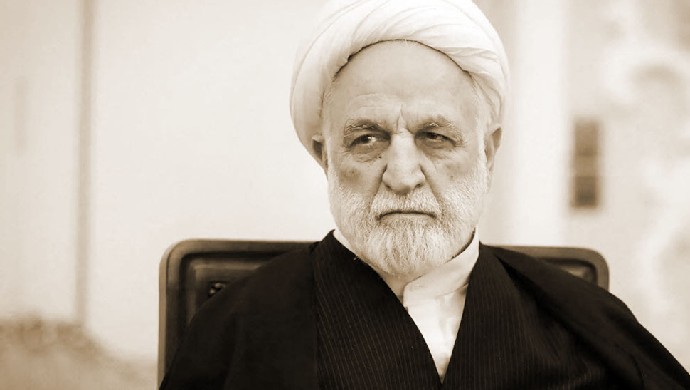

Gholamhossein Mohseni Eje’i, the head of the Iranian regime’s judiciary, has issued an alarming directive for the judicial system to adopt a “war posture,” paving the way for fast-tracked death sentences. In the shadow of ongoing conflict, Eje’i’s remarks signal a dangerous shift toward establishing drumhead trials to quickly eliminate political dissidents.
This is not just empty rhetoric; it serves to justify a deadly surge in state violence. Over the past month, the regime has executed 13 political prisoners—including seven protesters from recent uprisings and six members of the People’s Mojahedin Organization of Iran (PMOI/MEK). Meanwhile, four other protesters have just been sentenced to death and remain under imminent threat of execution.
Eje’i’s “war posture” and the return of field courts
According to state media, Eje’i recently declared that the judiciary has taken on a “jihadist and war posture” in response to what he termed the “third imposed war,” a reference to the recent conflict between the regime and U.S. and Israel. Crucially, he emphasized that dealing with “enemy collaborators” will no longer be “subject to the usual conventions and rules governing normal conditions.” He demanded “utmost decisiveness and acceleration” in issuing and carrying out sentences, particularly concerning laws like the “intensification of punishment for espionage.”
This explicit departure from normal legal procedures severely restricts the fundamental right to a defense and eliminates transparency, especially in cases where capital punishment is on the table. Eje’i’s rhetoric draws terrifying parallels to the summer of 1988. Following the ceasefire of the Iran-Iraq war, the regime utilized similar “war conditions” to hold rapid, extrajudicial field courts, resulting in the massacre of thousands of political prisoners.
The human cost: 13 dissidents hanged in a month
Eje’i’s fast-tracked judicial violence is already a grim reality. Driven by profound weakness following the massive nationwide uprisings in December 2025 and January 2026, and desperate to maintain control after the death of Ali Khamenei and the installation of his son Mojtaba on March 9, 2026, the regime has escalated its campaign of state-sanctioned terror.
Between March 30 and April 4, 2026, authorities hanged six PMOI members: Vahid Bani Amerian, Abolhassan Montazer, Mohammad Taghavi, Akbar Daneshvarkar, Babak Alipour, and Pouya Ghobadi. These highly educated professionals and veteran prisoners were taken to the gallows after a cowardly midnight raid on March 29 in Ghezel Hesar Prison. Over 20 guards, led by executioner Hassan Ghobadi, tricked the inmates by claiming it was a routine cell inspection.
During the same period, the regime executed four other political prisoners who had been arrested during the December-January uprising. And three more protesters were executed in March, right before Nowruz, the Iranian New Year.
Rushing to the gallows: Four protesters sentenced to death
Following Eje’i’s call for swift and decisive action, Branch 26 of the Tehran Revolutionary Court has handed down death sentences to four protesters arrested during the December 2025–January 2026 uprisings. The court, presided over by the notorious Judge Iman Afshari, condemned Mohammad-Reza Majidi-Asl, Bita Ali Hemmati, Behrouz Zamani-Nejad, and Kourosh Zamani-Nejad to death on vague charges of “operational action for a hostile state.”
The four were also handed five-year prison sentences and orders for property confiscation for “assembly and collusion against national security,” while a fifth relative and co-defendant, Amir Ali-Hemmati, was sentenced to five years and eight months in prison. The court failed to provide precise, differentiated details about each defendant’s individual actions, relying instead on generalized accusations such as participating in protests, chanting slogans, and alleged use of explosives. Human rights monitors emphasize that the sentences rely heavily on forced confessions extracted under severe torture and pressure, stripping the verdicts of any legal validity.
The latest judicial developments reveal that the regime’s courts are merely an extension of its security apparatus, designed to legalize the assassination of its opponents. By blurring the lines between normal judicial proceedings and wartime security measures, the regime is desperately attempting to maintain its grip on power through sheer terror. The international community must recognize this “war posture” as a mandate for a new massacre of political prisoners and take urgent action to halt the executions.