

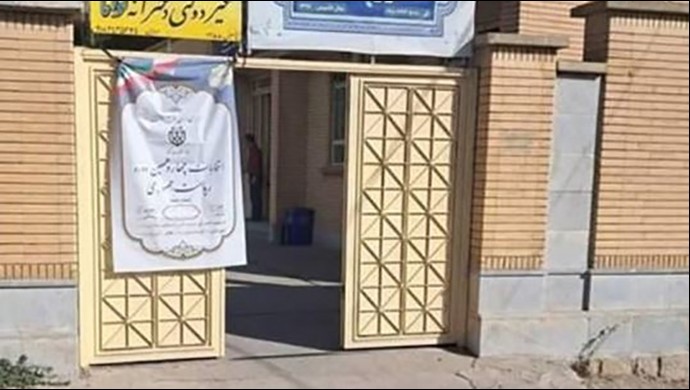

The second round of the Iranian regime’s sham presidential election turned out to be nothing but a global scandal. From early morning, regime supreme leader Ali Khamenei, in utter desperation claimed he had heard that this time the “enthusiasm and interest of the people” would be higher than before and wished that “it would be so,” pinning his “happiness” on the probability of a high voter turnout. In the first round of this so-called election, he had said that for the “continuation and dignity” of his regime, he needed the people’s votes and their inked fingers, lamenting that the turnout was “less than his expectation.”
An existential crisis
In addition to Khamenei, other leaders, officials, and members of the two ruling factions expressed their frustration and desperation over the decisive and fiery boycott of the election show.
Ali Younesi, Special Assistant to the former President Hassan Rouhani, said, “Last week’s low turnout had an important message; the officials of the Islamic Republic received this message.”
Mohammad-Javad Azari Jahromi, Minister of Information and Communications Technology in the Rouhani administration, said, “Do not leave voting to the last moments; extending the voting hours is up to the election organizers.”
Mohammad Bagher Ghalibaf, Majlis (Parliament) Speaker, said, “We hope that the people, with their enthusiastic presence in the second round of the presidential election, will compensate for the low turnout in the previous round and correctly shape their future for the next four years.”
Former president Mohammad Khatami (1997-2005) said, “Everyone should participate in this decisive election with hope so that we do not regret it later.”
The commander of the IRGC Aerospace Force, Amir Ali Hajizadeh, said, “Voting is simple; people should come forward. Every vote is like a missile for the state.”
It couldn’t have been stated more bluntly that the issue is about the existence of the regime.
Mohammad Mohajeri, a journalist close to the principlist faction, said: “There is no time for doubt anymore; it’s a matter of existence or non-existence, and people will surely choose existence.” (Source: Chand Sanieh Telegram channel).
Falsified turnout figures agreed upon by both factions
Despite the significant and undeniable emptiness of the polling stations in the early hours of voting, this time both factions of the regime suddenly announced that the turnout in this round was higher than the previous one. This was a clear prelude to falsifying and manipulating the final statistics. This bubble-making occurred while various tactics were employed to make the polling stations appear busy and to portray the election show as vibrant. Bringing Afghan nationals and local individuals to the polling stations; approaching the families of prisoners and promising the release of their children if they participated in the election; forcing prisoners to vote; transporting and unloading Basij members and regime agents from one polling station to another by minibuses; militarizing cities and strategic points with the deployment of police, Islamic Revolutionary Guard Corps (IRGC) motor units, and plainclothes agents, creating a threatening atmosphere to force the population to vote; threatening to fire certain employees if they did not vote; and depositing money by presidential candidate Saeed Jalili for social security retirees were some of these actions.
The failure to “intelligently engineer public sentiment”
In short, both factions of the regime used all their propaganda capacities to poison the public psyche.
One used government facilities and worn-out tricks, while the other published photos and videos of “media-banned” Khatami, brought Sadegh Zibakalam from his jail cell to the polling station, highlighted the voting scene of Mehdi Karroubi, who is under house arrest, and exploited the slogans, quotes, and symbols of the 2022 uprising. They did this to reconcile, as they claimed, the majority who had boycotted the polls with the regime, but eventually, they wrote in frustration:
Chand Sanie Telegram channel quoted Abbas Moussayi, a member of the political bureau of the regime’s National Development Party, as saying, “Intelligent management of the psychological space of society and bringing a larger segment of the discontented society into the fold requires more extensive efforts.”
On July 5, Didban Iran news website wrote, “It seems that the past week’s propaganda by reformists has not managed to break the ice for many election boycotters, and it is unlikely that the numbers announced by the Ministry of Interior tomorrow will show a significant increase in voter turnout.”
Didban added that the reformists’ tactics to create a fake polarization within the regime were so awkward and disgraceful that they had to write: “Election boycotters… are asking the reformists how long they plan to drag people to the polls with analyses like negative voting and scaring them from other candidates.”
The main winners and losers
What happened on July 5, 2024, had two main winners and losers. The main winners were the people and the Iranian Resistance, who once again highlighted the red line of overthrow by decisively and universally boycotting Khamenei’s show. It was proven that the majority of the Iranian people do not want the religious fascism and its constituent factions, and they seek change not in the ridiculous games of this regime but in its complete overthrow. The main losers were Khamenei and both factions of the regime, who sought to reduce the main polarization in Iranian society to a false polarization between reformists and hardliners. Once again, it became clear that, as Iran’s people have been chanting in their protests since December 2017, “the game is over.”